How to Tell If Your Exterior Is Failing Before Damage Starts

A real estate inspector in Douglasdale shares a story that stuck with him. He was evaluating a home for buyers when he noticed the sellers seemed nervous. The house presented well. Fresh paint, tidy landscaping, no obvious issues. But something felt off.
His thermal camera told the story. Behind that fresh paint were walls holding moisture. Above the pretty new ceiling tiles in the basement were water stains the sellers had covered up. The roof looked acceptable from ground level, but up close the shingles were cupping and the flashing had separated from the chimney.
The sellers had been watching their exterior fail for years. Instead of addressing problems when they were small, they’d painted over them and hoped nobody would notice. The buyers walked away. The sellers eventually sold for significantly less to someone willing to take on the repairs.
Catching exterior failures early isn’t just about avoiding big repair bills. It’s about maintaining a home’s integrity before problems cascade into something much worse.
Understanding How Exteriors Fail
Home exteriors don’t typically fail all at once. They fail progressively, with small problems creating conditions for bigger ones. Understanding this progression helps homeowners recognize early warning signs.
Sealants fail first in most cases. Caulking around windows, weatherstripping on doors, and sealant at penetrations have shorter lifespans than the materials they protect. When these flexible components crack or separate, they create entry points for water and air that stress everything around them.
Water entry leads to material degradation. Once moisture gets into places it shouldn’t, it begins breaking down wood, corroding metal, and creating conditions for biological growth. This damage happens slowly, often invisibly, inside wall cavities and roof assemblies where nobody sees it.
Structural movement opens new failure points. As water damage weakens materials and seasonal expansion and contraction cycles continue, components shift relative to each other. Joints that were tight open up. Fasteners lose holding power. Problems that started in one location spread to adjacent areas.
The key to interrupting this progression is catching problems in the sealant failure stage, before water damage and structural movement begin.
The Once-a-Year Walk-Around
Every homeowner should walk their property at least once a year with exterior condition in mind. Spring works well for this, after winter stresses have done their worst but before vegetation makes close inspection difficult.
Start at the foundation and work up. Look for cracks in foundation walls or the parging covering them. Check that the grade still slopes away from the house rather than toward it. Note any gaps where siding meets foundation that could allow pest entry or water infiltration.
Examine siding from multiple angles. Walk close to see cracks, holes, and deterioration. Then step back and look at the overall plane. Bulging or waviness suggests problems with the substrate behind the siding. Pay particular attention to areas near ground level where splash-back from rain exposes materials to more moisture than higher sections.
Check every window and door frame. Run a finger along caulked joints feeling for gaps or loose sections. Look for paint failure on wood trim, which often indicates moisture problems. Verify that weatherstripping still makes good contact when doors and windows close.
Look up at the roofline. Binoculars help for detailed viewing without climbing. Check for missing, damaged, or curling shingles. Examine visible flashing for rust, gaps, or displacement. Look at fascia and soffit for paint failure, staining, or visible damage.
Red Flags on the Roof
Roof problems often go unnoticed until water appears indoors. Learning to spot early warning signs prevents the surprise discovery of damage that’s been developing for months or years.
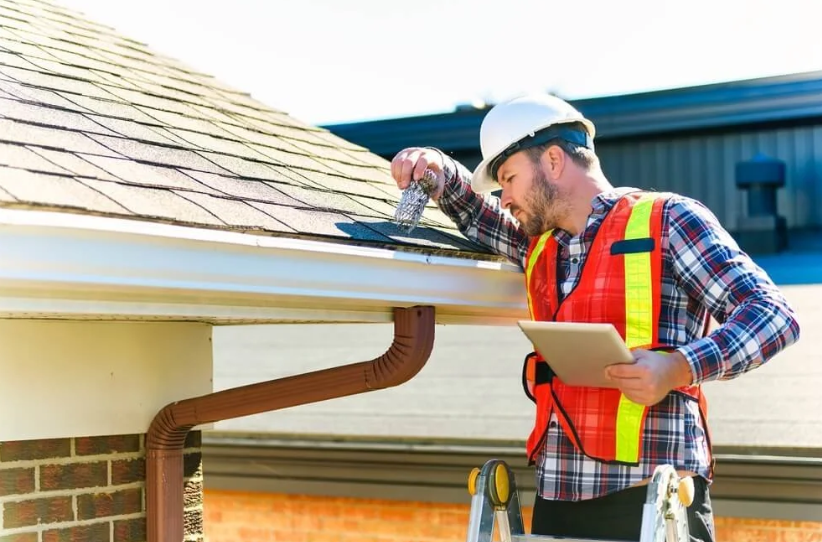
Shingle granules in gutters indicate roofing material approaching the end of its life. All shingles shed some granules, but significant accumulation suggests accelerated deterioration. The bare shingles left behind are vulnerable to UV damage and water infiltration.
Shingles that appear darker in some areas than others may be holding moisture. This moisture retention softens the shingles and accelerates breakdown. The color variation is often most visible when the roof is drying after rain.
Flashing that’s lifted, bent, or visibly separated from adjacent surfaces has stopped protecting the transition it was installed to weatherproof. These failures are common around chimneys, vents, and skylights where thermal movement and weather exposure stress the joints constantly. Experienced inspectors from Angels Roofing know these vulnerable areas intimately and check them carefully during every evaluation.
Sagging roof planes indicate structural problems beneath the surface. Even slight visible sagging suggests something has failed, whether rafters, sheathing, or supporting structure. This isn’t a cosmetic issue; it’s a structural concern requiring prompt evaluation.
Siding Warning Signs
Siding serves as the primary rain screen for most Calgary homes. When it fails, everything behind it becomes vulnerable.
Buckling or warping in any siding material suggests moisture problems. Vinyl buckles when improperly installed or when heat buildup behind it causes expansion. Wood warps when it absorbs moisture unevenly. Fiber cement can warp if installed without proper clearance from surfaces that hold moisture. Regardless of material, warping indicates something isn’t right.
Fading significantly worse in some areas than others points to UV exposure variations that might indicate material differences or installation inconsistencies. But uneven fading can also indicate areas where moisture is affecting the siding differently, which warrants investigation.
Visible gaps between siding pieces that weren’t there originally indicate either installation failure or material shrinkage. Either way, gaps allow water behind the siding where it can damage sheathing and framing. Small gaps get larger over time as water damage progresses.
Soft spots when pressing on siding reveal rot in wood substrates or failed attachment allowing the siding to flex. Siding should feel solid against the wall structure. Any sponginess or excessive give indicates problems requiring investigation.
See also: Arcadia Home Care: Your Local Partner in Dementia Home Care Solutions
Window and Door Clues
Windows and doors are among the most complex exterior components, with multiple materials meeting at critical transitions. They’re often the first places where weather-tightness fails.
Difficulty opening or closing doors and windows sometimes indicates settlement or structural movement. But it can also indicate swelling from moisture absorption. If frames stick during humid weather or after rain and free up during dry periods, water is getting into wood components.
Condensation between glass panes of double or triple-glazed windows signals seal failure. The insulating gas has escaped and moisture is entering the space between panes. Beyond the foggy appearance, this indicates the window is no longer performing as designed thermally.
Daylight visible around door frames when doors are closed indicates gaps that allow air and water infiltration. Run this check on exterior doors at night with interior lights on, looking from outside for light leakage around the frame perimeter.
Peeling paint or stain on door and window frames concentrates at locations where water is getting in. Paint fails fastest where moisture is present. Following the peeling pattern often reveals the entry point for water that’s causing problems.
Interior Evidence of Exterior Problems
The inside of the house often shows signs of exterior failure before the outside does. Water and air find their way through the envelope and reveal themselves indoors.
Check corners where exterior walls meet ceilings. This intersection corresponds to the roof-wall transition outside, one of the most common failure points. Staining, cracking, or tape separation in these corners often indicates water entry at the exterior connection.
Feel along exterior walls during cold weather. Cold spots indicate either insulation gaps or air infiltration. Either problem points to envelope deficiencies that are allowing outside conditions to affect interior surfaces.
Watch for mold growth in closets along exterior walls. These areas often have reduced air circulation, allowing humidity to build when moisture infiltrates. Mold in closets frequently traces back to exterior water or air leakage that should be addressed at the source. For persistent issues, getting a professional exterior assessment can identify entry points that aren’t obvious from casual observation.
Efflorescence on basement walls near the exterior indicates water moving through the concrete. The white mineral deposits are left behind as water evaporates. While often dismissed as cosmetic, efflorescence signals water pathways that can worsen over time.
Calgary-Specific Concerns
Local climate conditions create particular patterns of exterior failure that Calgary homeowners should watch for specifically.
South and west-facing walls endure the most intense UV exposure and temperature cycling. These exposures age siding and roofing faster than north-facing surfaces. If deterioration appears on sun-exposed faces while shaded faces still look good, the sun-facing materials may be approaching end of life even though the house overall appears fine.
Ice dam evidence around roof edges indicates ventilation or insulation deficiencies that will continue causing problems each winter. Even if no leaks have developed yet, chronic ice dam conditions accelerate roofing deterioration and eventually lead to water entry.
Hail damage sometimes shows up immediately after storms but can also reveal itself gradually as damaged shingles deteriorate faster than surrounding materials. Circular crack patterns, dents in metal components, and broken seals at shingle edges all indicate hail impact that may not have been obvious immediately after the event.
Chinook stress appears at transitions and joints more than on surface materials. The rapid thermal cycling works seams and sealants particularly hard. Check caulked joints and flashing after chinook events for any new gaps or separations.
Creating an Action Plan
Finding potential problems is only useful if it leads to appropriate action. Prioritize findings based on urgency and potential consequences.
Active water entry demands immediate attention. Any evidence that water is currently getting into the building envelope should be addressed as soon as possible. Water damage accelerates quickly once it starts.
Failed sealants without evidence of water damage are next priority. These are failures waiting to cause problems. Recaulking and resealing before water entry begins is simple preventive maintenance that avoids larger repairs later.
Cosmetic deterioration without functional failure can be monitored. Faded siding that’s still performing doesn’t need immediate replacement. Worn paint that hasn’t yet led to substrate damage can be addressed when convenient. But monitoring means actually watching these conditions and acting when they progress.
Document everything found during inspections. Photographs with dates create a record that shows how conditions change over time. This documentation helps prioritize repairs and provides evidence if insurance claims become necessary. For issues beyond DIY assessment, schedule a professional evaluation to get expert opinions on severity and appropriate responses.
The Advantage of Early Detection
Those Douglasdale sellers learned the hard way that ignoring exterior problems doesn’t make them go away. Their strategy of painting over issues and hoping for the best cost them tens of thousands when buyers discovered what they’d tried to hide.
Homeowners who catch exterior failures early face dramatically different outcomes. A tube of caulk applied at the first sign of sealant failure costs a few dollars and takes an afternoon. The water damage that develops if that same failure goes unaddressed for five years can cost thousands and require weeks of remediation.
The choice between these outcomes isn’t luck. It’s attention. The homeowners who spend a few hours each year really looking at their exteriors, understanding what they’re seeing, and responding to early warning signs maintain homes that stay weather-tight for decades. Those who wait until damage forces their hand spend far more money and deal with far more disruption.
Every exterior will eventually need maintenance and replacement. The only question is whether it happens on the homeowner’s schedule or the building’s.